Paver Patios and Walkways
Pavers give a surface that can be lifted and reset, which is their real advantage over poured concrete. If something settles you take up that area, fix the base and put the same units back. The trade off is that the base and the edge restraint have to be right, because everything depends on them.
What makes a paver installation last
Excavation to proper depth. Six inches of compacted base under a patio, and closer to ten to twelve where vehicles will drive.
Compaction in layers rather than all at once. Stone compacted in lifts of a few inches reaches a density that a single deep dump never will.
A bedding layer of coarse sand at a consistent depth, screeded rather than used to level out an uneven base.
Edge restraint around the whole perimeter. Without it the outer units migrate outward, joints open and the field of pavers spreads. This is the most common failure on a patio that was otherwise built well.
Polymeric sand swept into the joints, which locks the units together and resists weeds and washout.
Pavers against poured concrete
Pavers cost more installed. They do not crack the way a slab does, because movement is absorbed in the joints, and individual units can be replaced.
Poured concrete costs less, gives a continuous surface with no joints, and is faster to install. It will develop cracks over time and repairs are visible.
For patios where a section may need lifting later, for example over a utility line, pavers are the practical choice.
Other drainage & hardscape we handle
French Drains
Structural water management around driveways, patios and foundations.
French Drains detailsRetaining Walls
Block and poured retaining walls with the drainage that keeps them standing.
Retaining Walls detailsTowns we cover for paver patios
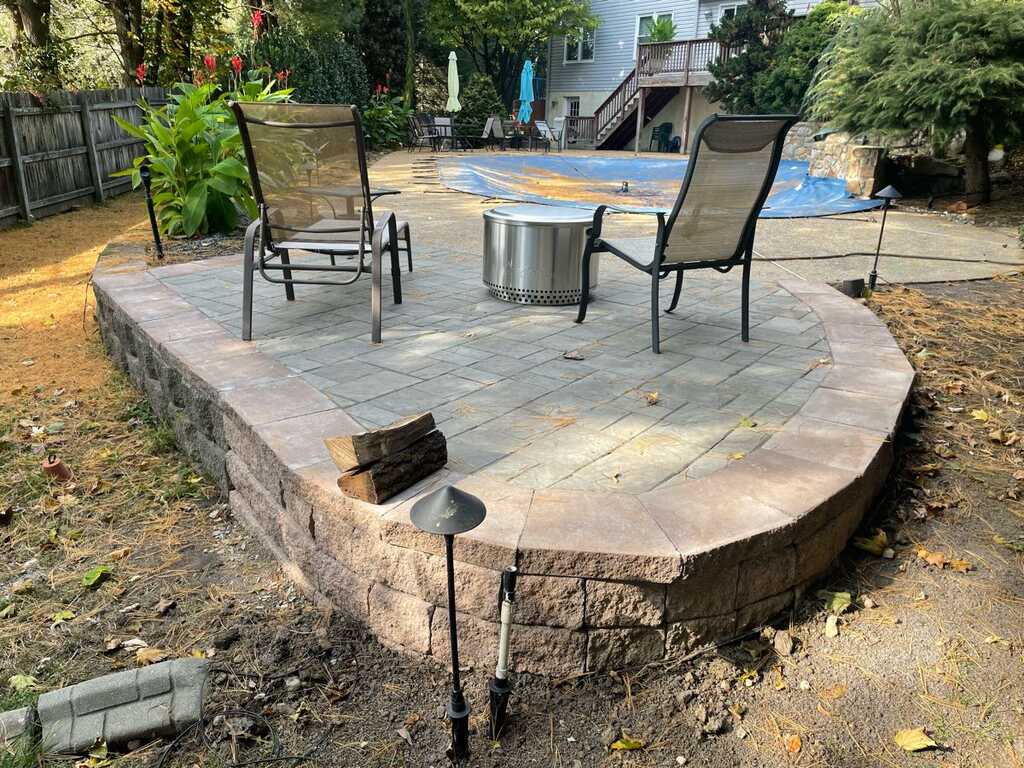
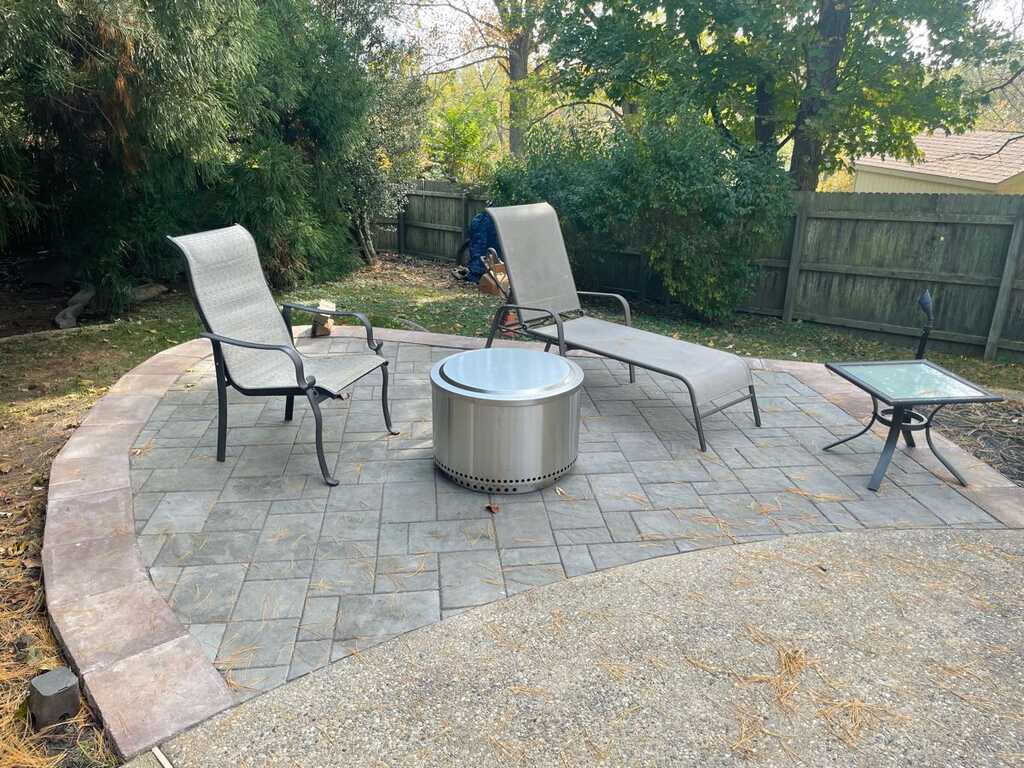
Paver Patios we have finished
Paver Patios questions
How much does a paver patio cost compared to concrete?
Pavers typically cost more installed than poured concrete for the same area, because both the materials and the labor are higher.
What you get for it is repairability and no cracking. Whether that premium is worth it depends on how much the surface matters to you long term and whether anything under it might need access.
Do paver patios get weeds?
Far fewer than they used to. Polymeric sand swept into the joints hardens and resists both weed growth and washout.
Some growth still appears over time, usually from seed landing on the surface rather than coming up from below. Occasional joint maintenance handles it.
How long do paver patios last?
The pavers themselves last decades and generally outlive the base they sit on.
What determines the life of the installation is base preparation and edge restraint. A well built paver patio can go thirty years or more with occasional joint sand replacement.
Get a free estimate
Send a few photos of the driveway, patio or drainage problem and we will come back with a real number, not a range.
- Most estimates come back within one business day.
- Photos usually get you a real number without a site visit.
- If you need less work than you asked about, we will say so.
Prefer to talk? (610) 646-1187